
Happy To Discuss About Your Requirement Get a Quote
Drug License (Pharmacy)
Hospital License
DRUG LICENSE (PHARMACY) for Hospitals in India
Get Approval Easily
A Drug License (Pharmacy) is essential for hospitals that store, sell, or dispense medicines. In India, hospitals must follow strict rules under the Drugs and Cosmetics Act, 1940 to ensure patient safety and legal compliance. Therefore, having a valid drug license is not optional but mandatory.
Moreover, this license ensures that hospitals handle medicines properly and maintain quality standards. As a result, patients receive safe and effective treatment. In addition, authorities regularly inspect hospital pharmacies to verify compliance.
With proper licensing, hospitals not only avoid penalties but also build trust among patients. Thus, obtaining a Drug License (Pharmacy) becomes a crucial step for every healthcare facility that operates a pharmacy unit.
WHAT IS A DRUG LICENSE?
A Drug License (Pharmacy) is an official approval that allows hospitals to store, distribute, and dispense medicines legally. It ensures that the hospital pharmacy follows safety standards and regulatory guidelines. Therefore, hospitals must obtain this license before starting pharmacy operations.
Furthermore, the license confirms that qualified pharmacists manage the medicines and maintain proper records. In addition, it ensures correct storage conditions to avoid damage or contamination.
Key Points:
- Legal permission to sell and store medicines
- Ensures safe handling and storage
- Required under Indian drug laws
- Must be issued by the State Drug Authority
- Mandatory for hospital pharmacies
As a result, this license protects both patients and healthcare providers.

WHO NEEDS DRUG LICENSE?
Every hospital that runs a pharmacy must obtain a Drug License. Therefore, if your hospital stores or dispenses medicines, you need this license. Moreover, even small healthcare centers with pharmacy units must comply with this rule.
Applicable for:
- Private hospitals
- Government hospitals
- Nursing homes
- Clinics with pharmacy units
- Daycare centers dispensing medicines
Thus, any healthcare facility involved in medical handling must secure this license to operate legally and smoothly.
REQUIRED DOCUMENTS
To apply for a Drug License (Pharmacy), hospitals must submit specific documents. Therefore, preparing the correct paperwork ensures faster approval and avoids delays.
Required Documents:
- Hospital registration certificate
- Pharmacist registration certificate
- Identity and address proof
- Premises ownership or rent agreement
- Layout plan of pharmacy
- Refrigerator and storage details
- Affidavit and declaration forms
In addition, authorities may request additional documents based on state rules.
REGISTRATION PROCESS
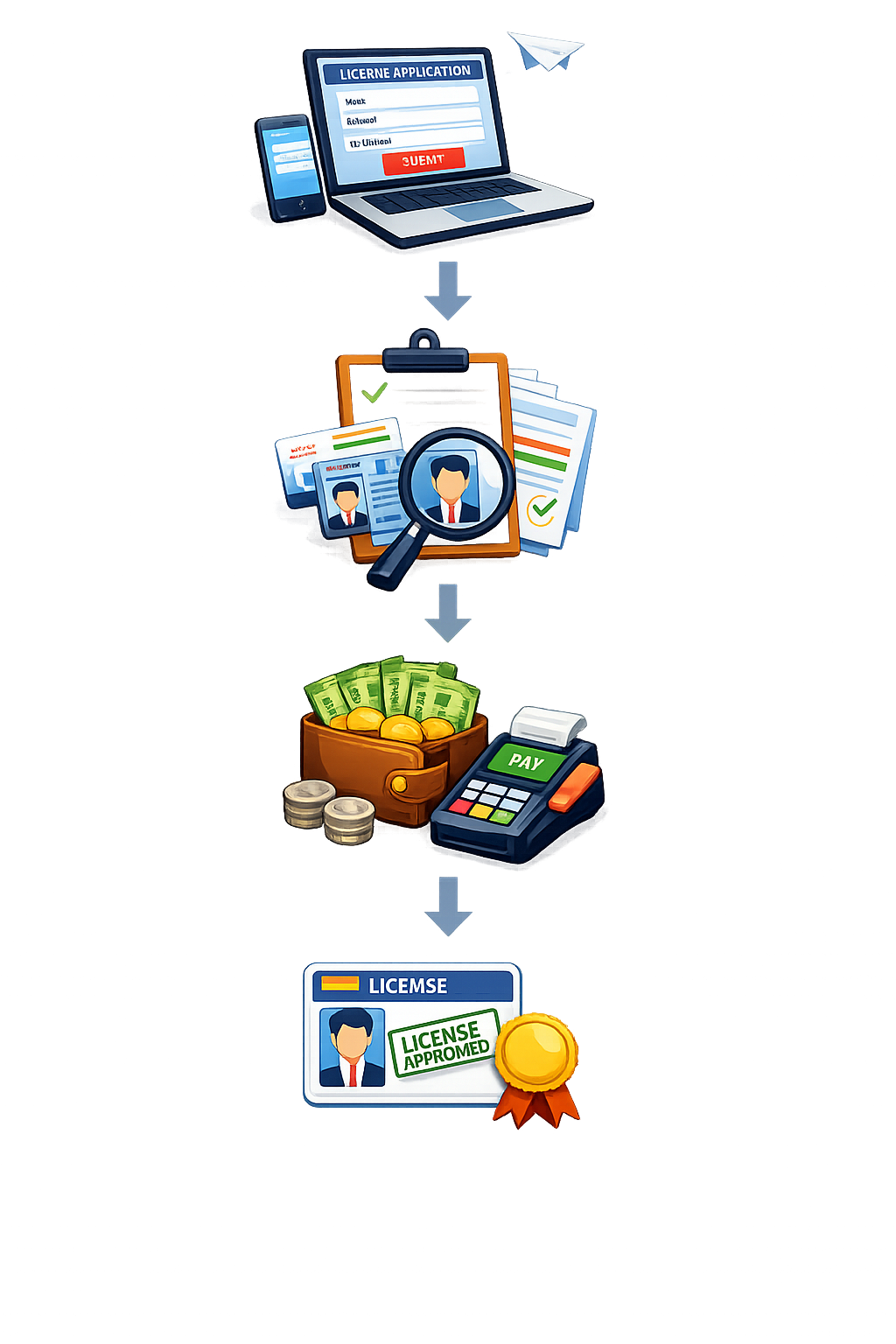
The process of obtaining a Drug License (Pharmacy) is simple if you follow the correct steps. Therefore, hospitals must apply through the State Drug Control Department. Moreover, proper guidance can make the process faster and hassle-free.
Step-by-Step Process:
- Prepare all required documents
- Submit application to Drug Authority
- Pay applicable government fees
- Inspection of pharmacy premises
- Verification of pharmacist credentials
- Approval and license issuance
After inspection, authorities grant the license if everything meets the standards.
BENEFITS FOR HOSPITALS & OUR EXPERT SUPPORT
A Drug License offers multiple benefits for hospitals. Therefore, it ensures legal operations and improves patient trust. Moreover, it helps hospitals maintain quality standards and avoid penalties.
Benefits:
- Ensures legal compliance
- Builds patient trust
- Avoids penalties and closure risks
- Improves pharmacy management
Thus, with professional assistance, you can get your Drug License quickly and focus on patient care.
👉 Learn about NDPS License for hospitals
Yes, every hospital with a pharmacy must obtain a Drug License. Otherwise, authorities can take legal action.
Usually, it takes 15 to 30 days. However, the timeline depends on document verification and inspection.
No, a registered pharmacist is mandatory. Therefore, hospitals must appoint a qualified professional.
Authorities can impose heavy fines or shut down the pharmacy. Hence, compliance is essential.
MedicoLex is a specialized medico-legal service platform powered by Prospect Group, designed to protect hospitals, doctors, clinics, and healthcare professionals from legal risks, compliance issues, and medical negligence claims.
Address:
R-52, First Floor, Zone-1
M.P. Nagar, Bhopal, Madhya Pradesh – 462011
Contact Us
- +91 9755950455
- medicolexbpl@gmail.com
- R-52, Zone 1, M.P. Nagar, Bhopal
Opening Hour
- Monday - Saturday, 10 am - 08 pm
© 2026 Prospect Ventures LLP. All rights reserved. Privacy Policy | Terms & Conditions | Disclaimer